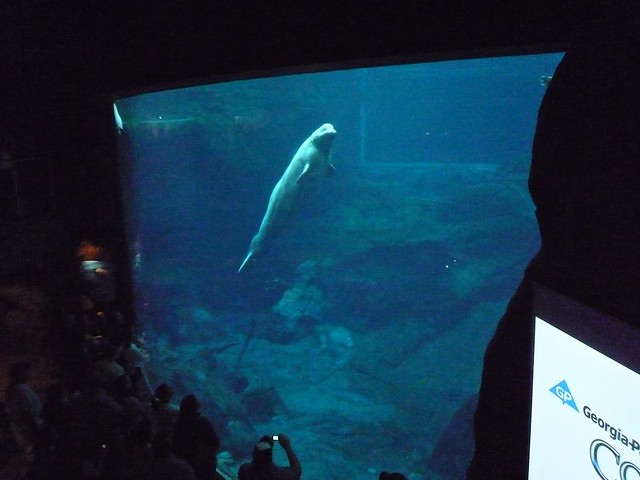
Beluga Whale at the Atlanta Aquarium
I was horribly disappointed by the Atlanta aquarium and it took me a long time to figure out why. There are many animals there that you don’t usually see, particularly whale sharks and beluga whales. They do a big business with their dolphin show, but after watching The Cove I wasn’t really interested in helping to fund that. I rode the long escalator to watch the two token dolphins swimming circles and walked away really sad.
The vibe of the place was just different from any other aquarium I have visited. Forking over my $28 and passing through an airport-style security gauntlet, rewards you with a view of huge banners for corporate sponsors. Where most aquariums have tanks, Atlanta places video screens with virtual footage of fish. Not many plants or corals, just fish. There was little hint of interdependent ecosystems except to point out how necessary and rewarding man’s (read corporate) interventions into wild habitats are. It was like stepping into an Exxon commercial. It was paid corporate propaganda of the sleaziest sort, and the spectators were asked to pay just as much as the sponsors. I refused to pay $16 to visit the Coke museum across the street.
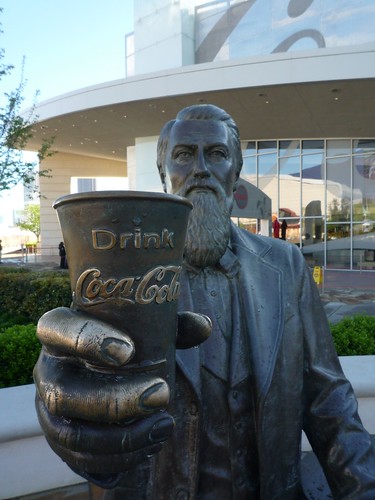
No thanks. The whole experience just seemed fishy (and not in a good way). Unlike Monterey, or even the Duluth Great Lakes aquarium that promote the preservation of unique and diverse environments, the Georgia Aquarium sells you the “great mammal’ view of history. The otter, for instance, is trumpeted as “the protector of the kelp forest” while man helps contribute to longer whale lifespans by trapping them and putting them in big glass tanks emblazoned with advertising. I felt like I needed a shower afterward and deserved a tip. Instead, tourists are encouraged to pay for the privilege of being told how important big mammals are.

That’s even worse than having to watch commercials at the theatre you’ve just paid to get into, which is even worse after I’ve stopped at the popcorn and Coke museum.
Why hasn’t Commercialism been formally prononounced a cancer now that it has become omnipresent.