Clio

Clio, muse of history
On the eve of bringing (hopefully) new animals into our house, I thought it would be good to sit down and write a bit about one of my best friends, Clio, who is recently deceased. People get confused about her name, so some accounting is in order.

When we first moved to Syracuse, I was immersed in studying nineteenth century photographic history. Though I’d been a photographer most of my life, I hadn’t really thought about it as a livelihood. It was more a vocation, a calling, rather than an employment opportunity. The lens of history is selective, and it distorts things. For every photograph that rests on a museum wall, there are a thousand more in the museum of the basement or archive without celebration or often even attribution. They are the the leftovers of history, the pieces left out of the stories we construct to try to understand ourselves, and how we got here. Mostly, I was discovering, that in the late nineteenth century, for women and middle class men, photography was a way to make a living.

I arrived in Syracuse ready to build a new life, because my wife had achieved that impossible dream of a solid tenure-track position at a good university. I came out in advance, while she was finishing her dissertation, to find and buy (for the first time in my life) a house. I was shell-shocked at the sheer creepiness and ugliness of the place. The first day I drove in past (I kid you not)  a seemingly abandoned strip club called the “Bada Bing.” Clearly, there was going to be an adjustment to living here compared to the Twin Cities. Thankfully, during grad school I had done well as an investor and was prepared to get us settled and get my wife through the tenure process. But living in this city really wasn’t my dream.

Nonetheless, we managed to locate a nice older tract house near the edge of the county, bordering on nice farm country. I found myself just relaxing driving to it, out of the city and past a tiny duck pond on a stream, to a quiet neighborhood. I felt like we could all think there. We bought it.

We were in the city, just leaving the mortgage broker’s office. Standing outside while the lawyers and real estate agents were making small talk, I heard a little “mew” from the bushes. Krista looked on in disbelief as I went tromping out into the shrubbery. I found her. And I named her almost immediately. She was small– not really old enough to be weened. The photo that leads this post was taken in my lap, as I sat in the car while Krista drove the Uhaul truck we rented to buy  a bed with down to a pet store to buy kitten milk and supplies before I drove her there, our first new resident in our new home.

She was Clio, muse of history. Even though she grew up looking like a supermodel, she wasn’t named for Cleopatra. I felt like we were building a new history here, and from the moment we moved into our house she was with us. I enjoyed the pun of calling her my “mews,” and I didn’t know at the time that eventually we ended up calling her “mew” as often as anything else. She was the queen of this house.

Another popular nickname, though, was Fuzzolini. There wasn’t a thing that came into the house that she didn’t inspect. She made sure we were always in the correct place and time, herding us to get there. If we weren’t in the den at the correct time, she’d yell at you until you quit working and retired for the day. She sat on my wife’s desk as she slogged away at that first book, until at the appointed time she’d bug her until she quit. She was always the timekeeper, and the one that made sure that you followed through on anything you promised.

An unfortunate incident with canned cat food when she first got here almost made her a vegetarian, though she had a soft spot for factory fried chicken, “chicken of the cave” as Krista was fond of calling it. She was bossy, and persistent, and the master of protocol. I was only allowed (without protest) to pick her up in the kitchen, where it was my job to act as a mobile kitty platform and look out all the windows with her, and most of all, allow her to better keep an eye on Krista as she was cooking. As she got older, she became increasingly Krista’s kitty so much so that Krista insisted that we get Thalia so that I could have a kitty for myself.

But I had to remind her– I was the first one to hear Clio, and she always came to me when I was sad or troubled. She was my kitty too. And I miss her. She asked me to take her for a spin around the kitchen just a half an hour before she died. Everything seemed fine. She was happy, and purring. She died quickly and without warning, and left a huge hole in our house, which was as much hers as ours.

Clio was very much a winter kitty, part Maine Coon with huge pants like a cossack that were impossible to capture in pictures. It seems inconceivable to go through the winter without our companion.

On Sunday, we’ll drive north, nearly to Canada, to have a look at a brother and sister pair of cats that seem interesting. The shelter calls them their “lion king litter” and they’re about six months old. If they are interested, they might come live with us.

The Long View

Whenever you are lost, remember to turn around
inspirobot

When I was in graduate school in Minnesota, blogs I read were quite taken by Graphs, Maps, Trees by Franco Moretti. The basic premise, as I recall, was that the days of “close reading” of texts were done and what remained was to quantitatively compile data for “distant reading” of the complex currents of literary history to learn more than what we had by the concentration on specific details. This movement from micro to macro level emphasis wasn’t something that really ever interested me much; it seemed inhuman to consider the herd to be more significant than individual animals.

Coincidentally (or not) trackers acting to compile the reading and traffic patterns of the web (and blogs) were emerging with a vengeance. It’s hard for me to reconstruct the specifics from my memory, but I remember Blogdex from Cameron Marlow at MIT (2003-2006) which indexed about 9,000 blogs in the beginning, and Technorati that listed blogs indexed by incoming and outgoing links to expose a new generation of online writing. These people were individuals, though in most tellings of the tale they ultimately became datapoints for the brave new world of web traffic metrics.

After the first ten years, blogs were mostly gone and replaced by “social media” services that lowered the bar for entry, and lessened the commitment involved for writing online. And it also became a big money enterprise, where advertisers were quickly carving up the pie of data into ever more tightly focused niche markets. What killed blogs, I think, was the rise in another data herd progeny, spam. Sites were hammered with AI generated link spam to alter search engine rankings, and email spam drove people crazy. It was a matter of percentages. If you transmit a million spam messages, it only takes a tiny percentage of stupid or inattentive people to accidentally fall prey to the scam. Then, you’re rich (or president).

In the end, many blogs were forced to shut down the latest innovations (like trackbacks, which notified people when they were referenced by another online writer) and worst of all, end commenting altogether to avoid the hostility and commercial intrusions into their thoughts. Many creative talents, in my mind, were driven away and those who were left were primarily driven by financial gain.

Taking the long view and privileging  distant reading has reaped great rewards at the expense of any sense of individuality. Watching a sort of return to the narrow focused, less connected individual blogging that used to be the norm among a cadre of early adopters has been curious. It’s easy to drift away from this, it’s a lot of work and presents little reward. For me it was always more than a “cult of personality” where one or two voices would dominate the conversations.

There were so many tiny conversations, and it makes me sad to think of what potentialities were missed in pursuit of the long view.

Paper Heroes

Cover of Paper Heroes

Witold Rybczynski’s 1980 book fills in some gaps in understanding the rhetoric of utopian technological movements of the 60s and 70s. The second edition, from 1991, includes and epilogue which attempts to connect that rhetoric to the latest flavor of its time, sustainable development. It’s a cynical book, perhaps, but it is the kindest of critiques– I suspect that he, and every technological nerd of these times truly wants there to be a solution to useful deployments of technology for a common good.

The problem is that most of this literature is long on promises, and short on well thought out and executed examples. In  short, it’s a game primarily played by upper class white people to assuage their guilt over rampant overconsumption. I’m looking at you, professors at Cornell with six figure salaries tooling around in expensive SUVs with “Save the Whales” stickers.

AT (either unpacked as “alternative technology” or “appropriate technology”) is a cluster of ideas/technologies that are long on slogans and boosters but short on rational discussion– such as wind power, solar energy, etc. The roots trace to E.F. Shumacher’s book Small is Beautiful, and proceed through ideas like Green Revolution. Rybczynski rightfully points out the cult-like “true believer” culture that emerged from these napkin sketch level ideas. Ideas deserve more rigorous consideration. Little has changed. The world is full of paper heroes whose contributions are slogans and empty persuasion; it’s interesting to me to follow younger people in the newer craft moments discovering these books, thinking that the concepts and slogans can be simply transported to the present to some effect. Fact is, they were pretty ineffectual then and would be now if adopted wholesale. It has to be noted that critiquing those ideas is even less popular, and probably the reason Rybczynski’s book is sadly out of print.

He thought then, and I must agree, that there is much to be learned from these old utopian technology movements– largely to avoid the same sort of mistakes of sloganeering and assumptions of white, frequently male, privilege. I’m impressed that Rybczynski spotted it in 1980:

Perhaps the most important role that the AT movement has played in international development has not been as the inventor of a new approach, but rather as a reminder to the international development establishment that a large number of people have been left out of the development process and that technological options do exist which could begin to rectify the situation. However, as an attempt to demodernize technology and take an alternative path, Appropriate Technology is doomed to failure. It is a pretentious, romantic, even poignant attempt to stop the ocean with a child’s beach shovel and play bucket. (166)

As a woodworker, I have really enjoyed dealing with technology at a very up close and personal level. There was a trend, when I was growing up (as exemplified by Norm Abram, and shows like Home Improvement) to look to new small scale power tool technologies as a solution to building things. In the last decade or so, human powered tools are making a comeback with an equal amount of sloganeering. On either side, there haven’t been a shortage of “guru” type figures like Roy Underhill. It isn’t that the technologies being evangelized are inherently superior or inferior, but rather that the majority of people who lack the means, training, or space are left out.

The message shouldn’t be taken to be that “woodworking is a bourgeois activity” but rather that there is a problem with the cultish, elitist pronouncements that the problem is “solved” by these approaches. The problem is rather that effort must be made to bring education and technology to everyone in a more equitable fashion, rather than concentrating on those who have the means/dollars to deploy them.

For me, Saint Roy’s most powerful message is that historical technologies (wedge & edge) are not quaint ways of doing things but meaningful tools for the future. Technology does offer the means to solving our problems. But we’ve got to look for the complications posed by accessibility. Not everyone can build a geothermal or solar powered home, or even a log cabin– but these technologies must stay in our field for vision as potential solutions.

Gonne

Maud Gonne, three-quarter length oval portrait, with right hand on hip, wearing black dress and celtic brooch cropped, by J.E. Purdy

William Butler Yeats was obsessed with Maude Gonne. It’s hard to imagine/understand the milieu they moved through, cloaked in the mystique of The Hermetic Order of the Golden Dawn. But it’s easy to understand, and appropriate his caution to her:

Had I the heavens’ embroidered cloths,
Enwrought with golden and silver light,
The blue and the dim and the dark cloths
Of night and light and the half light,
I would spread the cloths under your feet:
But I, being poor, have only my dreams;
I have spread my dreams under your feet;
Tread softly because you tread on my dreams

Yeats was rejected by Maude Gonne, repeatedly, as he proposed marriage to her across his life. Though it seems a stretch, I feel a similar relation between myself and technology. I’ve always wanted to feel closer to it, but it seems to reject me every time.

Building an electric motor, I think, from a kit
As a kid I loved building little technology-based kits. We didn’t have a lot of money, so these were usually gifts from my eldest brother at Christmas time. My parents primary gift was regular trips to the library, were I entertained myself by checking out a lot of science books (I’m of my own mystical time– we were landing on the moon and such). Science books that I found were the stuff of dreams– publications distributed at low cost to libraries published by UNESCO. Their mission in science education hasn’t changed since they were founded in 1945.

UNESCO is the United Nations Educational, Scientific and Cultural Organization. It seeks to build peace through international cooperation in Education, the Sciences and Culture.

The dream of a better life was always, for me, connected with the positive deployment of science and technology. As a child of the 60s and 70s, I benefited greatly from their efforts. The United States withdrew from participation in UNESCO in 1984, along with the UK and Singapore.

Why? Because the United States wanted no part of The New World Information and Communication Order. “Many Voices, One World,” a report authored by the McBride Commission was seen as a threat to freedom of the press, though it actually was more of a threat to domination of corporate media.  Sean McBride, a nobel prize winner and son of Maude Gonne, chaired the UNESCO committee responsible for the report, which counted Gabriel Garcia Marquez among its members. The phrase suggested that to cure the unbalanced flow of information between developed and undeveloped world, a new order would be necessary. Apparently, this tread on the dreams of mass media, so promoting education worldwide would have to continue without the financial support of the US and UK.

The concerns, rooted in the radical context of the 60s, over the distortions of reality inherent in the selective deployment of news and information, and possibility of the spread of outright falsehoods through limited media were remarkably prescient. It did not escape notice, also, that the entire communications infrastructure of the time was built upon the foundation of military and commercial surveillance satellites. Hannah Arendt’s 1969 proposal that “all technologies are violent” comes to mind here. The third world was getting the short end of the stick, but they would continue to attempt to address the inequalities across the 80s and 90s.

At its core, the idea of equal education and equal access to technology seems to be a good one, and eventually when the radical movement to provide this through government rather than private action was quashed at UNESCO (and, coincidentally, the Internet broke the stranglehold of mass media) the UK and the US found it safe to return financial support to UNESCO in 1997 and 2003. But the romance of technology, especially regarding “equality” seems hopelessly trampled by the march of progress.

Time & Destiny

Trusting the past inspires destiny
Generated by Inspirobot, an AI poster algorithm

It’s been three years since I wrote anything here. A number of smart friends have started migrating away from the prevalent social media (Facebook) either back to blogging or to other online social outlets which somehow seem less evil and intrusive. Others are simply disappearing from the online world altogether. In a profound way, the rise of smart algorithmically driven exploitations of sociality is actively making the world smaller. I wonder if it’s a good thing or a bad thing.

Social media, be it blogging or corporate platforms like Facebook and Twitter, was a technology ostensibly created to harness the power of collective humanity, either to facilitate the flow ideas or provide entertainment,– inevitably simply working promote consumption of one sort or another. What has sent it off the rails?  As an early adopter of blogging, I always suspected that money was the culprit. When people started placing small advertisements on their web sites and blogs, trying to drive and manipulate traffic to line their pockets, the corporatization of blogging began. Social media was then born in earnest, wedding artificial intelligence to the search for novelty and profit. At the worst, it became politically manipulative, leading to questions regarding the nature of truth itself and the ability of human beings to resist their worst impulses. Watching the melt-down of the US government in real time it becomes difficult to avoid an apocalyptic tone as I write this; I am reminded that what made me stop trying to write in longer form was the inexorable march towards the Trump presidency. I abandoned trying to make sense of anything. It’s been three years of this now, of being ruled by the twittered rants of a childish fool.

But in the back of my mind, the question of technology is never far away. I grew up believing that technology could save us, and I’m hardly a luddite who wants to abandon indoor plumbing for the good life in the woods. The basic question that I keep circling, and have been circling now for at least the last three years (when I’m not terrified about the end of the world) is simply this:

How do you tell which technologies are good and which are evil?

Technologies are never neutral, and it’s hard to understand how skeptics can cling to the notion that there is some hidden force behind the wheel driving us off a cliff by simply using “neutral” technologies that might otherwise be used for good. No, if you have a car with a steering wheel that only operates within a narrow range it seems eventually there will be a turn that it can’t manage and the whole thing will go off the cliff. If we die, it won’t matter if it’s the car or the drivers fault. It will matter if we choose to continue riding in it, past the point of no return.

Savage Aesthetics

One passage in William Morris’s News from Nowhere (1890) has haunted me since I read it. The protagonist is navigating the Thames river and passes through an old style pound lock and wonders why the centuries old technology is still in use. In this pastoral vision of the future, the answer he’s given is this:

‘You see, guest, this is not an age of inventions. The last epoch did all that for us, and we are now content to use such of its inventions that we find handy, and leaving those alone which we don’t want. I believe, as a matter of fact, that some time ago (I can give you a date) some elaborate machinery was used for the locks, though people did not go so far as to try to make the water run uphill. However, it was troublesome, I suppose, and the simple hatches, and the gates, with a big counterpoising beam, were found to answer every purpose, and were easily mended when wanted with materials always at hand, so here they are, as you see.’

‘Besides, said Dick, ‘this kind of lock is pretty, as you can see; and I can’t help thinking that your machine-lock, winding up like a watch, would have been ugly and would have spoiled the look of the river: and that is surely reason enough for keeping such locks as these. (192, Penguin Classic ed. 1993)

Today, our aesthetic choices might be different. I remember a story not long ago about some of the locks on the Erie Canal still using electrical equipment well over a hundred years old. It looks quite pretty to modern eyes. What makes one technology good and another not worth using? For Morris, it seems, it was a question of looks.

polynesian-face-tattoo-04122013-2

Trying to figure out the clearest take away from Typee (1846), Melville’s narrative about his time among the “savages” of the Marquesa Islands, it’s hard to shake the closing anxiety Melville faced at the prospect of having his face tattooed. This was long before Adolph Loos proclaimed ornament is a crime using tattooing as his benchmark for savagery; indeed, Melville seems to show great admiration of the natives and their technologies (especially food technologies) through the book. But having his face tattooed? That was a bridge too far— he could never return to polite society if he allowed this. His choice to leave centered on aesthetics.

While he lived with the Typee, Melville was frequently in awe of their way of life; in fact, the book represents to me a powerful allegorical (and direct) questioning of the nature and bounds of civilization:

As I extend my wanderings in the valley and grew more familiar with the habits of its inmates, I was fain to confess that, despite the advantages of his condition, the Polynesian savage, surrounded by the luxurious provisions of nature, enjoyed an infinitely happier, though certainly less intellectual existence than the self-complacent European.

The naked wretch who shivers beneath the bleak skies, and starves among the inhospitable wilds of Terra-del-Fuego, might indeed be made happier by civilization, for it would alleviate his physical wants. But the voluptuous Indian, with every desire supplied, whom Providence has bountifully provided with all the sources of pure and natural enjoyment, and from whom so many of the ills and pains of life— what has he to desire at the hands of Civilization? She may “cultivate his mind,”—may “elevate his thoughts,”—these, I believe are the established phrases—but will he be the happier? Let the once smiling and populous Hawaiian islands, with their now diseased, starving, and dying natives, answer that question. (149, Library of America ed.)

The facile answer regarding civilization and technology (as alluded to here) is that technology frequently can better our lot in life by alleviating our pains and wants; if there’s no need of this, then what other benefits does civilization accrue? Not many, when it comes to the islands of Hawaii, as Melville rightly states. The population was decimated, and was still being decimated at the time that he composed this. In the United States, the same thing was happening to the Native Americans, particularly in California. The “voluptuous natives” of the Pacific Coast were among the most devastated by the encroachment of so-called civilization. Those who needed it least, suffered the most at its hands.

This passage is not an isolated reflection, but to be balanced in discussing the book it is not entirely a political diatribe (one of the only books of Melville’s to be censored and  modified for the US audience), but also a titillating exercise in voyeurism, “a peep” at Polynesian life as the title states:

I happened to pop in on Mehevi three or four times when he was romping—in a most undignified manner for a warrior king—with one of the prettiest little witches in the valley. She lived with an old woman and a young man, in a house near Marheyo’s; and though appearance a mere child herself, had a noble boy about a year old, who bore a marvelous resemblance to Mehevi, whom I should certainly have believed to be the father, where it not that the little fellow had no triangle on his face—but on second thoughts, tattooing is not hereditary. Mehevi, however, was not the only person upon whom the damsel Monotony smiled—the young fellow of fifteen, who permanently resided in the house with her, was decidedly in her good graces. I sometimes beheld both him and the chief making love at the same time. (224)

The explanation that Melville unfolds is that this is a polygamous society where women are allowed to take several husbands. Women’s issues frequently surface in the book, particularly taboos for women. They apparently weren’t allowed to ride in canoes, which Tommo (Melville’s alter ego in the book) fights and manages to overturn for his paramour, Faraway. Note however, the little joke about tattoos not being hereditary. Society, though inherited, doesn’t mark us quite that directly.

The sexual overtones of the book tend, in many critical accounts, overshadow several discussions of technology. For example, Melville’s description of his valet Kory Kory’s efforts to start a fire with a spinning stick is frequently summoned:

At first, Kory-Kory goes to work quite leisurely, but gradually quickens his pace, and waxing warm in the employment, drives the stick furiously along the smoking channel, plying his hands to and fro with amazing rapidity, the perspiration starting from every pore. As he approaches the climax of his effort, he pants and gasps for breath, and his eyes almost start from their sockets with the violence of his exertions. This is the critical stage of the operation; all his previous labors are in vain if he cannot sustain the rapidity of the movement until the reluctant spark is produced. Suddenly he stops, becomes perfectly motionless. His hands still retain their hold of the smaller stick, which is pressed convulsively against the further end of the channel among the fine powder there accumulated, as if he had just pierced through and through some little viper that was wriggling and wriggling to escape from his clutches. The next moment a delicate wreath of smoke curls spirally into the air, the heap of dusty particles glows with fire, and Kory-Kory almost breathless dismounts form his steed. (135)

I would to defy anyone to watch, for instance, a Massai tribesman perform this procedure and sexualize it the way that Melville, ever the bawdy sailor, has:

This, I think, is primarily Melville the showman doing his best to earn a living as a writer. The real meat of the scene occurs after the lascivious passage:

What a striking evidence does this operation furnish of the wide difference between the extreme of savage and civilized life. A gentleman of Typee can bring up a numerous family of children and give them all a highly respectable education, with infinitely less toil and anxiety than he expends in the simple process of striking a light; whilst a poor European artisan, who  through the instrumentality of a lucifer, performs the same operation in one second, is put to his wits end to provide for his starving offspring that food which the children of a Polynesian father, without ever troubling their parent, pluck from the branches of every tree around them. (136)

Note the description of Western fire starting as “the instrumentality of a lucifer” rather than a gift from Prometheus, which would apply to both indigenous and Western fire starting. What makes a good technology? A technology that solves our needs, I suspect, would be Melville’s answer. I find it interesting that with the proceeds from Typee, Melville bought a farm of sorts, perhaps so he could pick food from every tree around him.

His cautions against the incursions of imperialism and conversion, particularly conversion:

How little do some of these poor islanders comprehend when they look around them, that no inconsiderable part of their disasters originate in certain tea-party excitements, under the influence of benevolent looking gentlemen in white cravats solicit alms, and old ladies in spectacles, and young ladies in sober russet low gowns, contribute sixpences towards the creation of a fund, the object of which is to ameliorate the spiritual condition of the Polynesians, but whose end has almost invariably been to accomplish their temporal destruction!

Let the savages be civilized, but civilize them with benefits, and not with evils; and let heathenism be destroyed, but not by destroying the heathen. The Anglo-Saxon hive have extirpated Paganism from the greater part of the North American continent; but with it they have likewise extirpated the greater portion of the Red race. Civilization is gradually sweeping from the earth the lingering vestiges of Paganism, and at the same time shrinking the forms of its unhappy worshipers. (230)

Melville’s resistance to the “tea-party excitements” that surrounded polite western society chafed against Melville (see his reaction to Hungarian fund raisers a few years after), but he was not immune to the potential benefits of “civilization” as he knew it, particularly the benefits of technology. Given his later narratives regarding the whale oil trade, I found it interesting the way he painstakingly described the Polynesian technology for lighting the night:

At this supper we were listed by several of the native tapers, held in the hands of young girls. These tapers are most ingeniously made. There is a nut abounding in the valley, called by the Typees “armor,” closely resembling our common horse-chestnut. The shell is broken, and the contents are extracted whole. Any number of these are strung at pleasure upon the long elastic fibre that traverses the branches of the cocoa-nut tree. Some of these tapers are eight to ten feet in length; but being perfectly flexible, one end is held in a coil while the other is lighted. The nut burns with a fitful bluish flame, and the oil that it contains is exhausted in about ten minutes. As one burns down, the next becomes ignited, and the ashes of the former are knocked into a cocoa-nut shell kept for the purpose. This primitive candle requires continual attention, and must be constantly held in the hand. The person so employed marks the lapse of time by the number of nuts consumed, which is easily learned by counting the bits of tap distributed at regular intervals along the string. (244)

Besides providing light, the apparatus, as designed is also a clock. There’s an obsessiveness about his technological descriptions which is fitting what Morris labeled as “the age of invention.”

Melville’s excitement about technology in Typee is closely matched by his interest in food and tattoos. In the next paragraph, he rails against sushi: “Raw fish! shall I ever forget my sensations when I first saw my island beauty devour one?” But, his aesthetic sense was not offended because she didn’t eat “vulgar-looking fishes: oh no; with her beautiful small hand she would clasp a delicate, little, golden-hued love of a fish, and eat it as elegantly as innocently as though it were a Naples biscuit” (245).  If things are pretty, then they are okay. This jibes with Morris’s attitudes towards technology perfectly: only beautiful technologies— or foods— should be celebrated.

There is of course a lot more to say about the book, but I must press on to its sequel Omoo.

Hats off to Hungary

While reading Typee, I found myself marveling at the sheer density of his descriptions of food on the Marquesa islands. It’s a romance of sorts, so I was expecting and not disappointed by the number of interludes with native girls and such; but food? Why so much attention to food?

Melville wrote Typee while living in Troy, New York (coincidentally the point of origin for the character/ caricature “Uncle Sam”) in 1845 and because of its success he made enough money to finance a home across the Hudson near Pittsfield, Massachusetts he named “Arrowhead” in 1850. I found a letter written December 28, 1851 from Mrs. Sarah A. Morewood, his neighbor, that speaks to hungers of various kinds.

I hear that he is now so engaged in a new work as frequently to leave his room till quite dark in the evening when he for the first time in whole day partakes of solid food— he must therefore write under a state of morbid excitement which will soon injure his health

If he frequently starved himself to write, this might explain it somewhat. Or, it might be the memories of a sailor who had spent much time thinking about food while at sea. But the food references don’t end there, as the letter continues:

I laughed at him somewhat and told him that the recluse life he was leading made his city friends think that he was slightly insane—he replied that long ago he came to the same conclusion himself but if he left home to look after Hungary the cause in hunger would suffer

I pondered a moment what he meant by “the cause in hunger” without any really satisfactory conclusions, but the punning is tantalizing, as is Mrs. Morewood’s further observation:

—Mrs. Melville is looking better in health than I have ever yet seen her look— I am strangely and strongly attracted to her and her family now that I know them as well as I do.

Curiously, a book suggesting an affair between Melville and his neighbor has just been published. What interests me more is the reference to Hungary. Hershel Parker, Melville biographer extraordinaire, has a direct explanation for the passage in his appendix to a volume of Melville’s poetry:

Late in 1851, when all good Whigs and Democrats were telling themselves they had set the slavery issue to rest for their generation by the Compromise of 1850, which included the Fugitive Slave Law, Americans gave Lajos Kossuth a triumphal tour of the country on behalf of the liberation of Hungary from Austria at a time when the United States should have been confronting its own political crisis, there was an element of hysterical displacement, a feel-good ineffectual celebration which required no national outlay of money and no commitment of American troops.

unnamedkk

Melville would have read in the Literary World of December 6, 1851, the “Lines Addressed by Walter Savage Landor to Kossuth on his departure for America,” an appeal to the north wind Boreas to spare him so that the United States might arm him for a return to his home: “Hungary! no more / Thy saddest loss [Kossuth] deplore; /Look to the star-crowned Genius of the West, /Sole guardian of the oppress. / Oh! that one and only nation dared to save /Kossuth the true and brave!”

Calling this particular passage a “grim pun,” Parker explains it thusly:

His attitude, expressed in a grim pun as he was completing the short version of Pierre, was that if he left home to look after Hungary (that is, to join in the feting of Kossuth) the cause of supporting his family “in hunger would suffer” (.)

800px-kossuth_104th_rsd_jehThis makes as much sense as any other explanation really; though I must say the few pages I scanned from Parker’s two volume biography of Melville contains a great deal of information about Sarah Morewood, which might merit further investigation. Zeroing in on the matter at hand though, Kossuth was revered around the world, including a statue in New York City.

I was intrigued to again find myself face to face with Austro-Hungarian history, as I was before when I was reading a lot about Adolph Loos. Stranger still though, was to find myself enthralled by stories about hats. Apparently, the statue as erected leaves out what Parker feels is the most salient characteristic of Kossuth:

After Kossuth’s departure, Americans, already manifesting a short national memory, turned their attention elsewhere, although for a while people remembered Kossuth whenever they saw an ostrich plume on a man’s hat. The fad he created outlived his cause.

Indeed, there is, as it turns out, a Kossuth hat. A bit of research groups it in a peculiar group of soft felt hats that culminate in the sort of rough-rider hats popularized by Teddy Roosevelt, a popular military headgear in both the U.S. and Australia.

Stephen Beszedits questions the connections between Hungary and the hat though, claiming that the Kossuth hat was the creation of a New York City haberdasher, John N. Genin. He claims that it’s an adaptation of another fad, the Jenny Lind hat, modified with the addition of a feather. However, Kossuth’s revolutionary credibility, and scientific justification, was quickly attached to the headgear, even if they felt the feather was silly.

Buchanan’s Journal of Man a medical journal published in 1851 reported:

The Kossuth Hat.—The Common and Kossuth Hat are thus described in the Scientific American:

“The common silk hats have what are termed felt bodies. These are made of felted wool, are soft and pliable, and allow the gas that passes from the head to escape freely. This is the Kossuth hat. To make it a common silk hat, this felt body is saturated with lac varnish, and a covering of silk plush is ironed on to it, and smoothed to shine like a mirror. This hat, then, the common sober hat, is then hard as sheet iron and quite stiff; it greatly resembles a little pot, and in warm weather it most effectually prevents the evaporation of the pate. It causes headache, makes the hair to decay early in principle: oldish people of a sedate turn, although they would prefer the Kossuth hat, do not like to adopt it just yet, from a prudential fear of becoming conspicuous. This is our feeling exactly upon the subject—we like the black felt ‘Kossuth hat,’ barring the little feather, (that may do well for a military man,) and we hope to see it come into such general use as will warrant us in doffing the hard shelled silk head kettle. There was never more ungraceful head gear than that of the common hat.”

I truly love the image of the conventional hat as a “hard shelled silk head kettle.” It seems no wonder that both the Austrian laden and the Kossuth hat were more attractive to military men who didn’t want to bake their pates. That aside, there is no question that Kossuth had an impact in New York and beyond, with or without his hat. I noted from the Wikipedia page on Lajos Kossuth that there was a street named after him in Utica, NY (about an hour from where I live) so I wanted to figure out why. Looking at a history of Utica from 1900, I found this:

In this year, (1851) the great singer, Jenny Lind, visited Utica and gave a concert in the Bleecker Street Baptist Church.

The following year, Louis Kossuth, the illustrious Hungarian patriot, was received by a committee of citizens (June 1, 1852), and a public meeting was held at the Museum, which stood on Genesee Street between Elizabeth and Bleecker.

There yet remain in Utica a few of the notes, “good for one dollar each, if presented one year after the attainment of Independence by Hungary,” mementos of the patriot fund raised during this American visit.

The location in Utica now looks like this, according to Google:

untitled

I’ve driven through here many times. The historian, writing in 1900, is not nearly so dismissive of the Hungarian patriot as Parker, Melville’s biographer. Parker claims that that Kossuth was soon forgotten, as the poets moved on to consider the problems of the unification of Italy. Hungary, like the Greek battle for independence that so obsessed Byron, faded from the cultural consciousness.

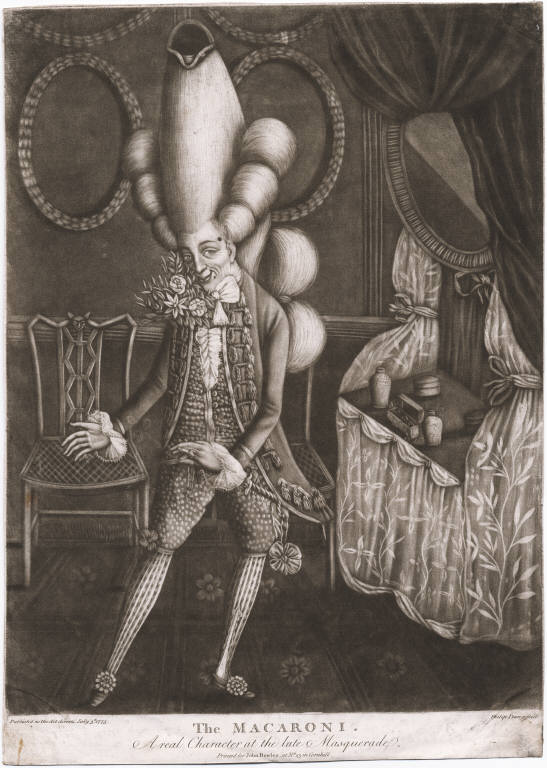
In the shower this morning, I suddenly thought to myself that the flood of Italian immigrants to America would have been just a bit after this; I wondered about the lyric in Yankee Doodle about “stuck a feather in his cap and called it macaroni” might have been somehow related. I was wrong, as Wikipedia points out that a Macaroni is a completely different sort of head gear from a much earlier time.

philip_dawe_the_macaroni-_a_real_character_at_the_late_masquerade_1773

Stan

28906339014_fd25b9065b_oI went to Kinney Drugs yesterday to get my biannual supply of Williams shaving soap, and as usual, everyone rushed the front and there was a line. The cashier called for help, and I stood about third in line behind an old man with a shopping cart. I didn’t look too hard at what was in the cart, but I noticed the man’s cap. It was covered in embrodiery and patches, proclaiming him as a Navy veteran of two wars, WWII and Korea. I suspect there aren’t that many of those left.

As the second cashier went to work and all those behind me rushed to her, the vet offered to let me go ahead of him. I said, “that’s okay I’m in no hurry” (I never am, these days).

“Where did you find those!” he said, pointing at the three packages of shaving soap in my hand. I misheard the question, and though he was commenting on my somewhat unusual choice and rambled off something about the fact that my father used to use it… He stopped me and said, “no, where in the store do I find those?”

I had taken the entire stock of the drugstore, so I quickly offered him one of boxes I was holding. He said that he used it all the time, and he was heading off to Florida and knew he’d have trouble finding it there, which is true. Not many drug stores stock it these days. The cashier got to him, and rang up his items, which came to six dollars or so, and he quickly paid with a credit card. I noticed that he was wearing hearing aids in both ears, but it was me who misheard him rather than the other way around.

He was just about to leave the line when the cashier pointed to the cart, and he said, “oh, I almost forgot” handing over a few bags of empty plastic bottles for recycling. She painstakingly tallied them up, and he commented that it would be nice if the drugstore had a redemption machine so the line wouldn’t get tied up, ever apologetic for taking too much time.

In fact, he started to walk away as the cashier exclaimed, “Stan, don’t forget your money!”

He said “Just put it in there” gesturing at the charity collection box on the counter. Looking at one of the women who had just finished up in the other line, Stan said “Wait a second, I want to talk to you.” It dawned on me that Stan was a part of the fabric of this drug store, everyone knew him but me it seemed. It choked me up to think that a life filled with service is long, and worthwhile.

During my trip to Maine earlier in the summer, I suddenly started to understand the difference between the Mid-Atlantic states and New England. New England is the land of voyagers, people who travel and yet always seem to return home. I started to think of generations that have gone to sea, and returned to the hard scrabble bits of land. Running into the Navy man here was a bit unusual; in New England, it’s the historical norm.

I’ve often lamented that New York is filled with provincial people who seldom look further than their neighborhood, let alone saw much reason to leave it. New England just isn’t like that; people leave, but unlike the Midwestern streams of migration, they don’t stay where they travel. They try, desperately sometimes, to get back.

I began to understand Jack Kerouac returning to Lowell to drink himself to death better, and the popularity of seafaring narratives. That’s when I decided that this year I was going to try to read Melville again. I’ve made it through Typee with great enjoyment, and stopped to read a biography, a couple of doctoral dissertations and a handful of articles before pressing on to Omoo.

I still don’t have great affection for the whale, but I’m beginning to at least understand the voyager spirit.


The Last Resort

The Last Resort
Arvin, California circa 1994.

A common subject for the “Songs from the Valley Towns” photographs was bars, both active and abandoned. The bar exteriors were frequently poetic, and I fondly remember the Last Resort, on the outskirts of Arvin, California on Bear Mountain Boulevard.

I’m not sure exactly where it was, but as I recall it was on the far side of town as the highway headed into the mountains. It’s gone now, I’m sure. I looked around on google maps and located similar buildings in the area, but nothing quite the same as “The Last Resort.”

Bear Mountain Blvd 1
Love the happy face in the lefthand window.

The view, btw., just on the other side of this building, pretty much looks like this:

Bear Mountain Blvd 2
Bear mountain lies directly down the road, as is fitting.

That view, which I didn’t record on that day, is the reason why I remember the approximate location so vividly.

Nonetheless, many of the bar exteriors I took in those years are hard to locate in memory. The Central Valley is full of them. For example, I have no idea where the El Cha Cha Cha bar was. Best guess is McFarland or Delano, but I can’t really be sure. I do remember a second version of this photo with a woman crossing the front of this bar which is better, but I haven’t been able to locate it.

El Cha Cha Cha Bar

However, after writing about King Lumber Company and doing the research, I located the Estrella bar: it was just down the street from there on 166 W. Perkins street in McFarland (the address is above the door).

Estrella Bar

Flanking the door, the Estrella bar proudly proclaims “live music” and identifies itself as a dance hall. No doubt there were countless Saturday nights passed by people who had worked the fields all week. The location looks a bit different these days, according to Google street view, but the “pole” motif is still in evidence.

166 W. Perkins

That’s the curious thing about the fog of progress; sometimes you can see for miles and still not know what you’re looking at. All the lost dreams, all of the songs, disappearing along with the world that used to be. We depend on an increasing array of memory devices, like photographs and stories, which we summon as a last resort, like maypoles to wrap our dreams around.

Postscript:

I suddenly remembered that I could look for signs of a street address on the Last Resort photo. Bingo! My memory was within a block of the original location, which is now a Chinese restaurant.

120 Bear Mountain Blvd.

And, locating the negative strip I can now say that the El Cha Cha Cha bar was also in McFarland. The sequence of photographs, King Lumber, Estrella Bar, El Cha Cha Cha, etc. was taken in March 1993.

The Fog of Progress

January 17, 1982
Selfie in a library parking lot, Southwest Bakersfield, 1982

Bakersfield is famous for its tule fog. It’s literally a low flying cloud that just can’t escape the ground. Lots of people die in automobile accidents during the fog season, but growing up there, I loved it. Fog days!

Fog is a powerful metaphor, and random google searching brought a short summary lecture on YouTube to my attention. The fog of progress, a final lecture in an online class on machine learning and neural networks, describes why it is so difficult to predict the future in quite meticulous and scientific terms.

It occurs to me, though, that it’s just as difficult to see through the fog of progress to understand the past.

Looking through some more of the “Songs from the Valley Towns” photographs, I started scratching my head trying to figure out where I took a particular photograph. It isn’t one of my favorites from the series, but I distinctly remember trying to make it work (visually) but thinking of it as a failure. Intellectually though, it’s a new favorite.

King Lumber Company
King Lumber Company, McFarland, CA March 1993

The project I undertook in the early 90s to photograph odd bits of landscape in the Central Valley was inspired by a musician friend, Scott Sturdevant (a.k.a Slim the Drifter) who recorded a cassette called “Songs from the Valley Towns.” Most people thought of the valley disparagingly (as far back as 1873, it turns out), but when Scott looked around he saw the hopes and dreams of the people who lived there. I saw those same hopes and dreams in the landscape. When dreams are in ruins, it’s hard to see them through the fog. There are a lot of ruins along Highway 99.

This photograph was one of the first I can identify from the series. I drove up Highway 99 from Bakersfield to the first real exit worth getting off at, which might have been McFarland— yes, the same McFarland immortalized by Kevin Costner in the 2015 track movie. I remembered vaguely, revisiting this one, that it was King Lumber Company (hard to forget, given the “crown” cut in the sign.) Nothing much remained but the “Co.” One of the great innovations, in my opinion, of photography in the 21st century is GPS data. It’s hard to remember where you actually took photographs as the fog of years rolls in.

King Lumber was a big clue, it turns out. Looking further into it turned up this photo from Bakersfield, captioned as being a location on Union Avenue (old Highway 99, actually) from 1911:

c45f637ba573b371bf77b43b9a98dd96A bit more research turned up that King Lumber was founded by twin brothers Everett and Elmore King, circa 1904.

Elmore-King The California Lumber Merchant from April 1, 1923 tells a story of Elmore King slipping out of a posh dinner to exchange clothes with the chef, in order to confront his host and demand payment up front for dinner.

His lumber empire grew to be huge. He founded a brick company as well, and I found notices that he became an importer of straw hats, clearly a great opportunity given the Bakersfield sun.

The trade publications also noted that he loved to play golf, and there are multiple references to his performance as a golfer. He expanded King Lumber to at least five different locations up and down the valley.

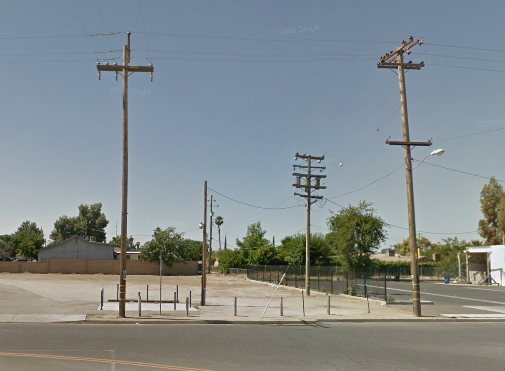
I located the address of the McFarland location from an old ad from 1961. This is what it looks like now, courtesy of Google street view:

KIng Lumber McFarland

The telephone poles are still there, and Highway 99, but not much else. King was the founder of a huge empire that is now largely gone. One thing seems to have survived from the King empire, at least in spirit. Although it’s a different organization from the Kern River Country Club King helped found (which died in 1935) The Bakersfield Country Club is located on the same spot.

Bakersfield Country Club is the area’s most exclusive golf club offering a limited number of full equity memberships and non-equity tennis and social memberships. It has a friendly tradition that started with its founding members. These were families with great pride and values born out of the farmlands and oil fields surrounding Bakersfield. These same values and friendliness have survived into second and third generation memberships since the inception of Bakersfield Country Club. There are many golf, tennis, and social events that keep the calendar busy year round.

I visited the Bakersfield Country Club once around the time that the photograph at the top of this post was taken, somewhere between 1980-82. The club is located near the Kern River, next to Lake Ming in a fairly deep valley, traversed by Alfred Harrell Highway. In the early years, the highway lead right to the golf course that the King brothers were instrumental in founding. Elmore King contributed redwood saplings from Eureka to the project. But when I was there, the highway ran from the bluffs on Panorama Heights to Highway 178, the Kern Canyon Highway. Notably, the county dump sat midway between, with oil fields on the other side of the river to the north, where my father worked until he retired in late 1982.

I wasn’t a member of the country club, but the lumber and hardware store where I worked, Sackett and Peters, threw a Christmas party there. I remember that party well, because it was the first and last time they ever booked the country club in the fog season. Down in the river basin, the fog was about a hundred times worse than it was in the city. By the time we stumbled out of the party around 2am, the fog was so thick that you couldn’t, without exaggeration, see the end of your own car from the driver’s seat.

Most people gave up and slept in the parking lot. However, my girlfriend Lisa and I braved it, along with Jim Powell, a nursery salesman and good friend of mine. Lisa and I were in my old Ford, and Jim had a small pick-up truck. It seemed like it took around an hour to locate the exit to the parking lot. I was reduced to driving with my door open, following the curb around the perimeter. Jim followed my tail lights, because my car was lower to the ground and it was easier to see the curb. When we got out of the parking lot (the toughest challenge of the night) the road up to Alfred Harrell Highway was easier; as you got higher, the visibility improved slightly.

Jim and I parted ways at the highway. I remember trying to convince him not to go his normal route back to his house in Panorama Heights (because the road dipped down lower from there), but he decided to brave it anyway. I turned left, toward the relative safety of the mountains. Jim headed towards the dump. I knew those roads like the back of my hand and felt like even if I couldn’t see, I could still drive them, and I’m sure Jim felt that same confidence of youth. Lisa and I made it home fine, as did Jim.

It dawned on me, as I went through the trouble of remembering this foggy story, and using arcane resources to locate addresses lost decades ago, that “the fog of progress” works both ways. While we are in constant danger, moving forward, of hitting the car that rides just ahead of us, we also flirt with the problem of running into the cars we used to be in, colliding with the past just as surely as we might crash into the future. After all, today is yesterday.

Oddly enough, this also implies the rota fortune, a distinctly medieval, rather than progressive, concept.